
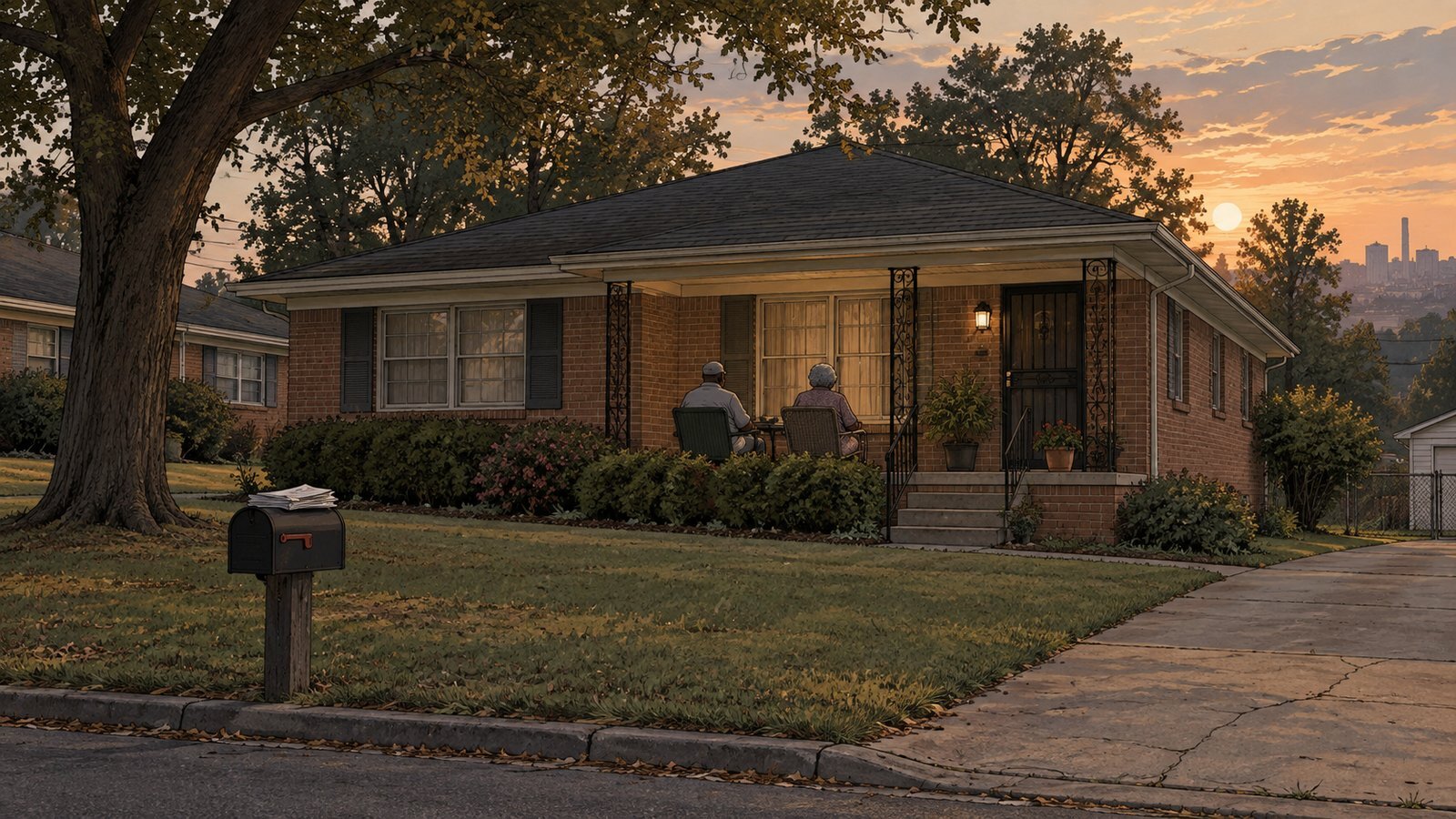
Since June 1, 2026, an Alabama homeowner who is 62 or older, or who has a qualifying disability, can protect up to $56,400 of home equity from creditors trying to force a sale. That is the work of HB96, sponsored by House Speaker Pro Tem Chris Pringle (R-Mobile), which passed the House on Jan. 20, the Senate on Feb. 26, and amended Sections 6-10-1 and 6-10-2 of the Code of Alabama. For everyone else, the statute’s base figure is $15,000; the bankruptcy firm Bond & Botes, which has Birmingham offices, puts the inflation-adjusted amount actually in use at about $18,800 per homeowner.
For an older Birmingham homeowner sitting on a paid-down house and a stack of medical bills, credit card judgments or collection letters, that is a meaningful change. It is also a narrow one, and the gap between what people think it does and what the statute says is where the trouble starts.
What the homestead exemption actually is
Alabama’s homestead exemption, in Section 6-10-2, protects “the homestead of every resident of this state” up to 160 acres and up to a dollar value “from levy, sale, execution or other process for debt collection” during the owner’s lifetime and occupancy. In plain English: a creditor who wins a judgment against you cannot force the sale of your home to collect it unless your equity is above the exempt amount. In bankruptcy, the same number decides how much of your home equity a Chapter 7 trustee can reach, and how much you have to pay unsecured creditors in a Chapter 13 plan.
Bond & Botes walks through the effect with a simple example: a $200,000 home with a $150,000 mortgage has $50,000 of equity. Under the old exemption, much of that equity might have been exposed. Under the new $56,400 exemption for seniors and individuals with disabilities, “the entire equity could potentially be protected.”
Who qualifies under HB96
The statute now sets two tiers. The base tier is $15,000. The higher tier, $56,400, applies “if the resident is either 62 years of age or older or an individual with a disability.”
The disability standard is spelled out. “Individual with a disability” carries the meaning in Section 21-7-1, and proof must include one of three things: a disability determination letter from the armed services, a state or federal agency, a private insurer, or a workers’ compensation settlement; receipt of benefits resulting from such a determination; or sworn affidavits from two Alabama-licensed physicians on the Department of Revenue’s ad valorem exemption form, at least one of whom is actively treating the disability.
Three other details in the amended statute matter for Birmingham owners:
- Married couples claim separately. When a homestead is jointly owned, each owner “is entitled to claim the exemption separately… to the same extent and value as an unmarried individual.” Two qualifying spouses on the deed can protect more than one.
- Mobile homes count. A mobile home “or similar dwelling” used as the principal residence “shall be considered a homestead” for these sections.
- Bankruptcy uses the petition date. New subsection 6-10-1(b) says that in any case under the U.S. Bankruptcy Code, the exemption amount “shall be governed by the law in effect as of the date the bankruptcy petition is filed.” Outside bankruptcy, Section 6-10-1(a) still ties the exemption to the law in effect when the debt was created. HB96 carved bankruptcy out of that rule. For a debt run up years ago, that carve-out is the difference between the old number and the new one.
What it does not protect you from
This is the part that gets people hurt.
It does not stop a mortgage foreclosure. The exemption is a shield against “process for debt collection,” meaning a creditor coming after your house to satisfy a judgment. It is not a defense against the lender whose loan is secured by the house. Bond & Botes put it flatly: “The homestead exemption does not stop a lender from foreclosing if mortgage payments are not made.” If you are behind on the mortgage, the number that matters is on the notice from your servicer, not in Section 6-10-2. Our stop foreclosure page covers what you can do about that.
It protects equity, not the house. If your equity is above the exempt amount and a creditor pushes a sale, the amended Section 6-10-38 lays out what happens. Commissioners try to carve off an exempt portion; if that is impractical, the sheriff advertises and sells the property. If a bid exceeds the exemption, the sale goes through, you are paid the exempt amount out of the proceeds, and “the excess only shall be applied to the satisfaction of the debt.” If no bid beats the exemption, the levy is discharged at the creditor’s cost. So a senior with $120,000 of equity and an $80,000 judgment is not protected from a sale. They are protected to $56,400 of the proceeds.
Federal residency rules still apply in bankruptcy. Bond & Botes note that federal law requires certain residency periods before you can use a state’s exemptions.
It is not legal advice, and neither is this post. How you file, when you file, and whose name is on the deed all change the answer. Talk to a bankruptcy or consumer attorney before you rely on any of this.
Where a cash sale fits
Most people reading this are not in bankruptcy court. They are somewhere earlier: a judgment was recorded, the calls have started, and they are trying to figure out whether the house is safe and whether they even want to stay in it. Three situations come up again and again in our conversations with older sellers across the Birmingham area.
The equity is above the line. If you own a house free and clear in Trussville or Hueytown worth $180,000 and a creditor with a large judgment is moving toward execution, the exemption is real but partial. A forced sale under Section 6-10-38 happens on the sheriff’s schedule, and the creditor is paid out of everything above $56,400. A voluntary sale happens on your schedule, at a negotiated price, with a closing attorney making sure the judgment is handled and you walk away with what is left. A recorded judgment typically surfaces in the title search and gets addressed at closing either way; the question is whether you control the sale or the creditor does.
You would rather have the cash than the house. A lot of homeowners over 62 are equity-rich and cash-poor, in a house that needs a roof or an HVAC system they cannot fund, with grown kids in another state. The exemption keeps a creditor from taking the house. It does not make the house easier to keep. Selling as-is, paying off what is owed at closing, and moving to something smaller is a legitimate plan, and it is one you can make on your own terms rather than after a levy. Our post on selling during a major life change covers the emotional side of that decision.
You are behind on the mortgage, not just on unsecured debt. Then HB96 does not help, and the clock is the lender’s. The practical window to sell on your own terms closes when the foreclosure sale happens. We can make an offer on a house with a default notice pending, pay off the loan at closing, and get you out with money in hand instead of a foreclosure on your record.
Birmingham Homebuyers has bought houses across the Birmingham metro for 30+ years and has 80+ five-star reviews from sellers, many of them older owners handling exactly these situations. We buy as-is, with no commissions, we close in days, and the closing attorney typically works through recorded judgments and liens as part of the process. You can request a cash offer with no obligation, and if the smarter move is to stay put and lean on the exemption, we will tell you that too.
Bottom line
HB96 gave Alabama homeowners 62 and up, and those with a documented disability, a $56,400 homestead exemption against debt collection and in bankruptcy, effective June 1, 2026, with the bankruptcy amount now fixed on the petition date. It is a real improvement over the old $15,000 statutory figure. It does not touch your mortgage lender, it protects proceeds rather than the house once equity exceeds the line, and it is only as good as the paperwork proving you qualify. Know which side of the line you are on before a creditor decides for you, and if selling is the better path, Birmingham Homebuyers can close before the sheriff ever gets involved.
Sources
- Alabama Legislature, HB96 (2026 Regular Session), enrolled act amending §§ 6-10-1, 6-10-2, 6-10-38 and 6-10-40, Code of Alabama 1975: https://alison.legislature.state.al.us/files/pdf/SearchableInstruments/2026RS/HB96-enr.pdf
- Bond & Botes Law Offices, “Alabama’s New Homestead Exemption for Seniors and Individuals With Disabilities: What It Means in Bankruptcy” (April 2, 2026): https://www.bondnbotes.com/blog/alabama-new-homestead-exemption-seniors
- Alabama Association of REALTORS, “2026 Legislative Session Recap” (April 21, 2026): https://www.alabamarealtors.com/posts/2026/04/21/2026-legislative-session-recap