
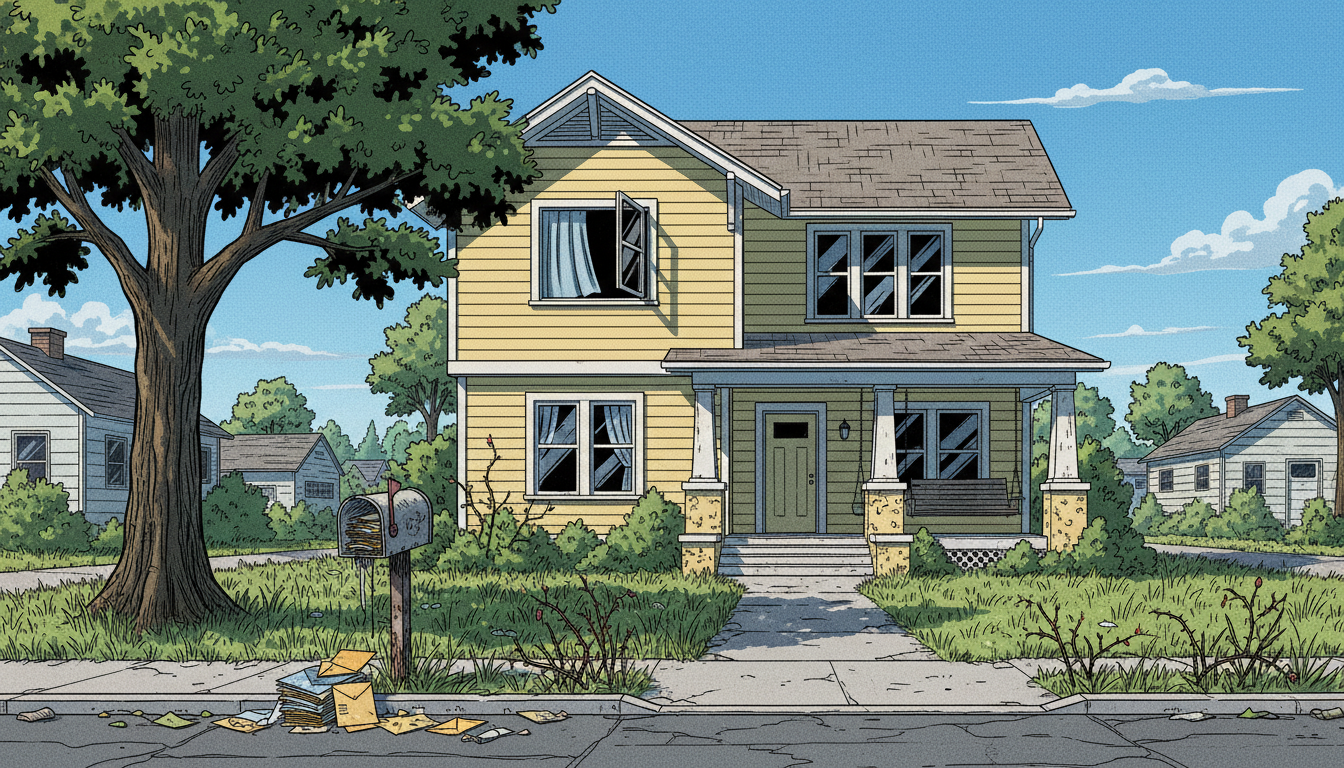
The person living in your vacant house does not need to win ownership of it to cost you the sale. They just need to be standing in it when a buyer’s title company asks who has possession.
That is the practical warning running through recent guidance from Alabama real estate professionals. A 2025/2026 guide from FirstService Residential, the property management firm, walks through how Alabama’s adverse possession rules work, and a February 2026 analysis by Decatur closing attorney J. Wesley Atkinson explains how occupancy problems kill real estate closings even when the occupant has no real legal claim.
Both are worth reading closely if you own an empty house in Birmingham. Vacant properties, inherited homes waiting on family decisions, and rentals between tenants are exactly where this problem starts.
The 20-year rule, and the 10-year shortcut
Under Alabama law, per the FirstService Residential guide, a squatter can only claim ownership through adverse possession by occupying a property for 20 consecutive years, or 10 years under the statutory route if they can show a recorded color of title, 10 years of annual tax listing, or a claim by descent or devise. On top of the time requirement, the possession has to be hostile (without permission), open and notorious, actual, and exclusive.
Twenty years sounds like a comfortable margin. Atkinson’s analysis points out why it is not the number that matters. Selling the property does not necessarily reset the clock, he notes, because the question is continuous possession over time, and periods can sometimes be combined. And long before any title claim matures, an occupant creates closing risk: title insurers add exceptions for “claims of parties in possession,” lenders delay or refuse funding, and buyers demand vacant possession before they will wire money.
In other words, a squatter with a hopeless legal case can still sink a retail sale. The deal does not die in court. It dies in escrow.
The fast-track removal, and its fine print
Alabama gave owners a faster tool. As of June 1, 2024, according to the FirstService Residential guide, a property owner or authorized agent can submit a sworn affidavit to local law enforcement to remove an unauthorized occupant from a dwelling without first filing an eviction case. Law enforcement verifies the affidavit, serves a notice to vacate, and can remove the person if they refuse.
The fine print is where owners get tripped up. Per the same guide, the expedited path only applies when the occupant entered and remains unlawfully, was never authorized, is not a tenant or holdover tenant, is not an immediate family member of the owner, has already been asked to leave and refused, and there is no pending litigation between the owner and the occupant over the property.
Miss any of those conditions and you are back in court on the normal timeline. A former tenant who stayed past the lease, a relative who moved into an inherited house, or anyone who can produce a text message suggesting permission does not qualify for the fast lane. And the guide is blunt about the alternative: self-help tactics like changing locks or shutting off utilities can expose the owner to liability.
What this looks like in Birmingham
The houses at risk are the ones nobody is watching. A house you inherited that sits empty while siblings decide what to do. A rental in Ensley or East Lake between tenants. A house you moved out of but never sold.
If someone moves in, here is the realistic sequence. You discover them weeks or months later. You determine whether they qualify for the affidavit process or need a full court eviction. You pay an attorney either way, because getting the label wrong (squatter versus holdover tenant) means starting over. Then, once the house is finally empty, you repair whatever the occupancy did to it before a retail buyer’s lender and insurer will touch it.
Atkinson’s checklist for buyers shows you the other side of the table: buyers are being told to verify possession before closing, demand written possession representations, and use escrow holdbacks when a property is not cleanly vacant. Every one of those protections for the buyer is friction, delay, and leverage lost for the seller.
If you are dealing with an inherited house that is sitting empty, we have covered what that waiting period costs separately. The squatter risk is one more line on that bill.
The cash-sale answer
A cash sale removes the two choke points where occupancy kills retail deals: there is no lender to delay funding, and no financing contingency hanging on a clean possession picture at closing.
Birmingham Homebuyers buys houses as-is across Jefferson and Shelby counties, including Birmingham, Bessemer, and Hueytown. If you own a vacant house you are worried about, or one that already has an occupancy problem, request a cash offer and tell us the situation. We would rather look at a complicated house than watch you lose a year to it.
The cheapest squatter problem is the one that never starts. The second cheapest is the one you stop owning.
Sources
- FirstService Residential, “Squatters’ rights in Alabama: A 2025/2026 guide” (Nov 4, 2025): https://www.fsresidential.com/alabama/news-events/articles/squatters-rights-in-alabama/
- J. Wesley Atkinson, “Alabama Squatter Law: How Squatters’ Rights and Adverse Possession Can Derail a Real Estate Closing” (Feb 2026): https://jwesleyatkinson.com/al-squatter-law/